By Alistair Johnstone
If you are searching how to be happy, you are probably tired of advice that sounds good in theory and useless in real life.
Most people do not need another quote about gratitude. They need a framework they can actually follow when life feels flat, heavy, or disconnected.
Happiness was not what I thought it was. I chased it in bottles for years. I thought happiness was intensity - a buzz, a release, a temporary escape from myself. It took me a long time to realise happiness is usually quieter: self-respect, steadiness, meaningful relationships, and waking up without dread.
This guide is built around that reality.
Key takeaways
- Happiness is less about chasing highs and more about building foundations
- Social connection is one of the strongest predictors of life satisfaction
- Daily structure beats occasional motivation
- Small actions repeated consistently produce emotional momentum
- You can build a life you enjoy without pretending everything is perfect
Why so many people feel "fine" but not happy
A lot of people look functional from the outside and feel disconnected on the inside.
The Campaign to End Loneliness reports that around 7.1% of UK adults feel lonely often or always, representing millions of people. Their evidence also highlights a clear link between loneliness and lower life satisfaction.
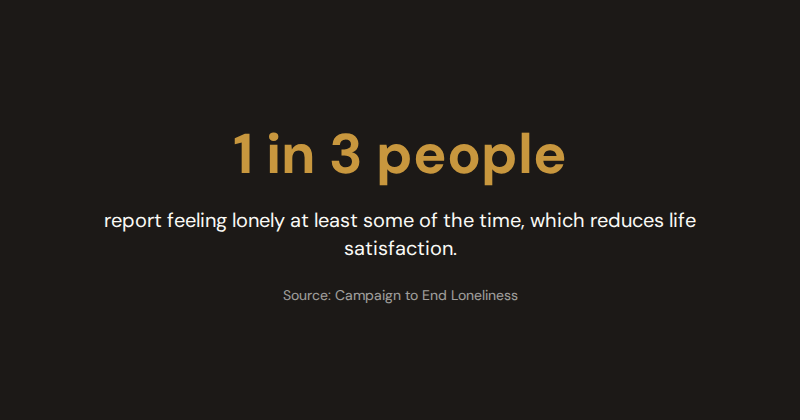
In plain English: you can be busy, productive, even socially visible, and still feel emotionally alone.
That is why "just think positive" advice often fails. Happiness is not a thought trick. It is built through behaviour, relationships, and meaning.
If you are serious about how to be happy, start by building the conditions that make happiness more likely.
Step 1: Redefine what happiness means for you
Many people are unhappy because they are pursuing someone else's definition of success.
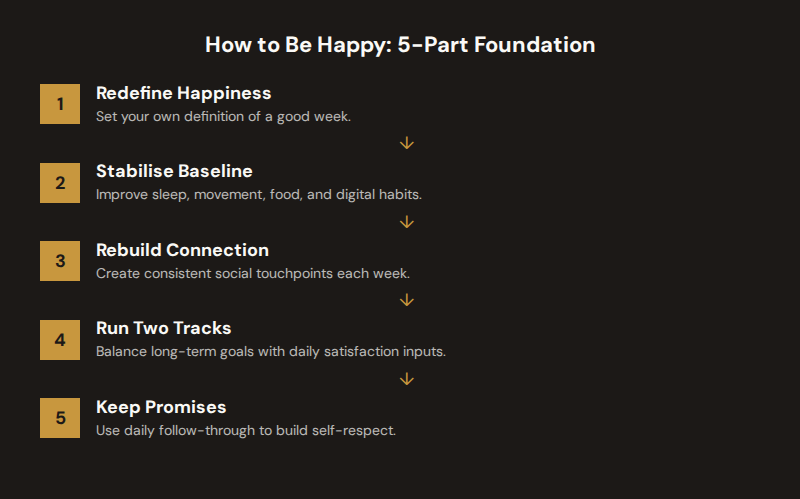
So before tactics, do this audit:
- What does a good week look like for me?
- What drains me even when it looks successful?
- What gives me energy even if nobody sees it?
Write your answers plainly.
For me, happiness stopped being nightlife, noise, and external approval. It became clear mornings, physical discipline, honest relationships, and work that actually helps people.
If you do not define happiness yourself, culture will define it for you - and you may spend years chasing a life you do not even want.
Step 2: Build your baseline before chasing breakthroughs
If you are asking how to be happy, this is where most of the answer lives.
Your emotional state is heavily influenced by your baseline habits.
Baseline checklist
- consistent sleep and wake time
- daily movement
- regular meals and hydration
- reduced doom-scrolling
- short moments of silence during the day
None of this is glamorous. All of it works.
When your baseline is chaotic, your mind interprets normal stress as threat. When your baseline is stable, you have capacity to enjoy life again.
If you want a broader lifestyle lens, what is lifestyle coaching is a strong companion read.
Step 3: Rebuild connection (because isolation kills joy)
Happiness is rarely a solo project.
The Campaign to End Loneliness also notes that around one in three people report feeling lonely at least some of the time. That alone should change how we think about "coping alone".
Use this practical connection plan:
- identify three people you feel better after speaking with
- set one recurring social touchpoint each week
- replace passive scrolling with active contact twice a week
Connection does not need to be dramatic. It needs to be consistent.
When I got sober, I had to relearn this. I could no longer rely on alcohol-centred socialising, so I built relationships around honesty, growth, and shared effort. It felt awkward at first. Then it felt like oxygen.
Step 4: Stop outsourcing your mood to outcomes
A common trap is conditional happiness:
- "I'll be happy when I earn more"
- "I'll be happy when I lose weight"
- "I'll be happy when they finally approve of me"
Goals matter. But if your mood is always postponed, happiness never arrives.
Try this two-track model:
- Track A: long-term goals (career, money, relationships)
- Track B: daily satisfaction inputs (movement, purpose, progress, connection)
You need both tracks running at once.
This is one reason many high-achievers still feel empty: Track A is strong, Track B is neglected.
For practical wellbeing foundations, wellness coach covers this in more depth.
Step 5: Build self-respect through kept promises
If you want to learn how to be happy in a way that lasts, focus on self-respect.
Self-respect grows when your actions match your values.
Use this daily formula:
- choose one promise you can definitely keep today
- complete it no matter your mood
- record it at the end of the day
That could be:
- a 20-minute walk
- finishing one hard task
- having one honest conversation
- going to bed on time
Small kept promises rebuild trust in yourself. And trust in yourself is one of the strongest roots of happiness.
My own rebuild was not one dramatic transformation. It was thousands of small promises kept over time.
A 14-day happiness reset plan
If you do not want another theory piece on how to be happy, run this plan:
Week 1: Stabilise
- fixed wake time
- daily movement (minimum 20 minutes)
- evening brain dump to clear mental clutter
- one social check-in every two days
Week 2: Reconnect and expand
- one meaningful in-person or phone conversation
- one values-aligned activity you have been postponing
- one "no" to something that drains you
- one hour spent on long-term direction
Track your mood from 1-10 each evening. Most people notice upward momentum through consistency, not intensity.
Common myths about happiness
Myth 1: Happy people are positive all the time
False. Happy people still feel sadness, frustration, and fear. They just recover faster and live in alignment more often.
Myth 2: Happiness comes from one big life change
Sometimes a major change helps. But usually happiness comes from repeated small actions.
Myth 3: If I am still struggling, I am doing it wrong
No. Struggle and progress can coexist.
Myth 4: I need to fix everything before I can feel better
You do not. Start where your feet are.
What to do when you feel stuck or numb
If you feel numb rather than anxious, try this sequence:
- Body first: movement, hydration, daylight
- Connection second: one real conversation
- Action third: one meaningful task
Do that for five days before judging whether "it works".
Numbness often lifts when your life gets movement and contact again.
If you are wondering whether this is the right season for support, five signs you're ready for coaching may help you assess honestly.
Happiness and ambition can coexist
One fear people have is: "If I stop pushing so hard, I'll lose my edge."
In my experience, the opposite is true.
When you are grounded, connected, and clear, your performance improves because you are no longer leaking energy into chaos.
Happiness does not make you soft. It makes you sustainable.
A practical "bad week" plan for when happiness feels far away
One of the biggest mistakes in the how to be happy conversation is assuming you will always apply these ideas when you feel good.
You need a plan for bad weeks.
Here is the one I use with clients:
Rule 1: shrink the target, keep the pattern
If your full routine feels impossible, reduce it:
- 45-minute workout -> 12-minute walk
- full journal -> three honest lines
- long catch-up call -> one voice note
The purpose is not performance. The purpose is identity continuity.
Rule 2: prioritise state-changing actions first
On low days, do actions that shift state quickly:
- shower and get dressed early
- leave the house once
- speak to one trusted person
- complete one meaningful task
Do these before trying to "think" your way into happiness.
Rule 3: avoid emotional isolation
When mood drops, people withdraw. That usually makes things worse.
Use a simple script:
"Bit flat this week. Not looking for fixing, just wanted to say hello."
You are not burdening people by being human.
Rule 4: review your inputs honestly
Ask at the end of the day:
- What did I consume today?
- Did it leave me lighter or heavier?
- What do I need less of tomorrow?
Your attention diet affects your emotional life more than most people admit.
Rule 5: return to meaning, not just mood
Mood fluctuates. Meaning steadies you.
Ask:
- Who do I want to be this week?
- What is one action that reflects that?
You may not feel instantly happy, but you will feel aligned - and alignment is often the path back to happiness.
If you are still asking how to be happy after trying alone for months, that usually means you do not need more information - you need better structure, feedback, and accountability.
One final reminder: happiness is not a trophy you win once. It is a relationship you maintain with your routines, your standards, your people, and your purpose. On hard weeks, return to basics. On good weeks, protect what is working. Over time, those ordinary decisions build an extraordinary life.
Keep it simple, keep it honest, and keep showing up.
Frequently asked questions
Is happiness a feeling or a skill?
It is both. Feelings fluctuate, but the conditions that support happiness can be built deliberately.
Can routines really make you happier?
Yes. Stable routines reduce chaos and create more room for energy, confidence, and enjoyment.
Why do I feel flat even when life looks okay?
Because external progress and internal fulfilment are not the same thing. You may be succeeding on paper while neglecting emotional needs.
How long does it take to feel happier?
Many people feel small improvements within two weeks of consistent change. Deeper shifts build over months.
What if I do not know where to start?
Start with one daily habit that improves your state and one weekly connection point with someone you trust.
Working with a coach
If you want support building these habits into your real life - not just reading about them - coaching can help with structure, accountability, and momentum. If you want support, you can book an initial session.